
Careers8 min read23 min video
The tap for juniors is off. The bill arrives in 2030.
The Junior Game Developer Time Bomb, and the Back Doors Still Open
Key takeaways
- Juniors are usually the last hire on a game team, after the director, lead, seniors and mid-levels. When studios are putting out fires, that hire is the first to go.
- Each step up the career ladder takes about two years, so a pause in junior hiring today becomes a shortage of mid-levels, seniors and leads three to five years from now.
- Juniors bring the fresh ideas that stop games from copying each other. Lose them and the industry moves backwards.
- Your showreel is roughly 40% of a hiring decision. The other 60% is your personality and whether you gel with the team.
- The main door is closed, so use the back doors: targeted applications, public work, a mentor, starting anywhere and networking in person.
If you’ve been applying everywhere in the games industry and nobody answers, I want to tell you something. It’s probably not your reel. It’s not your work, and it’s not you. Something has been changing quietly, and almost nobody is talking about it: studios have stopped hiring the junior game developer.
I was hired as a junior animator in the early 2000s. It was hard as nails, and those were the formative years of my career. That’s what being a junior is: getting into a studio, learning from the people around you and absorbing as much as you possibly can.
That route is closing, and I think it’s a time bomb for studios as much as for juniors.
Why have studios stopped hiring junior game developers?
It can feel like someone switched off a tap. The reason is simple: juniors are normally the optional hire.
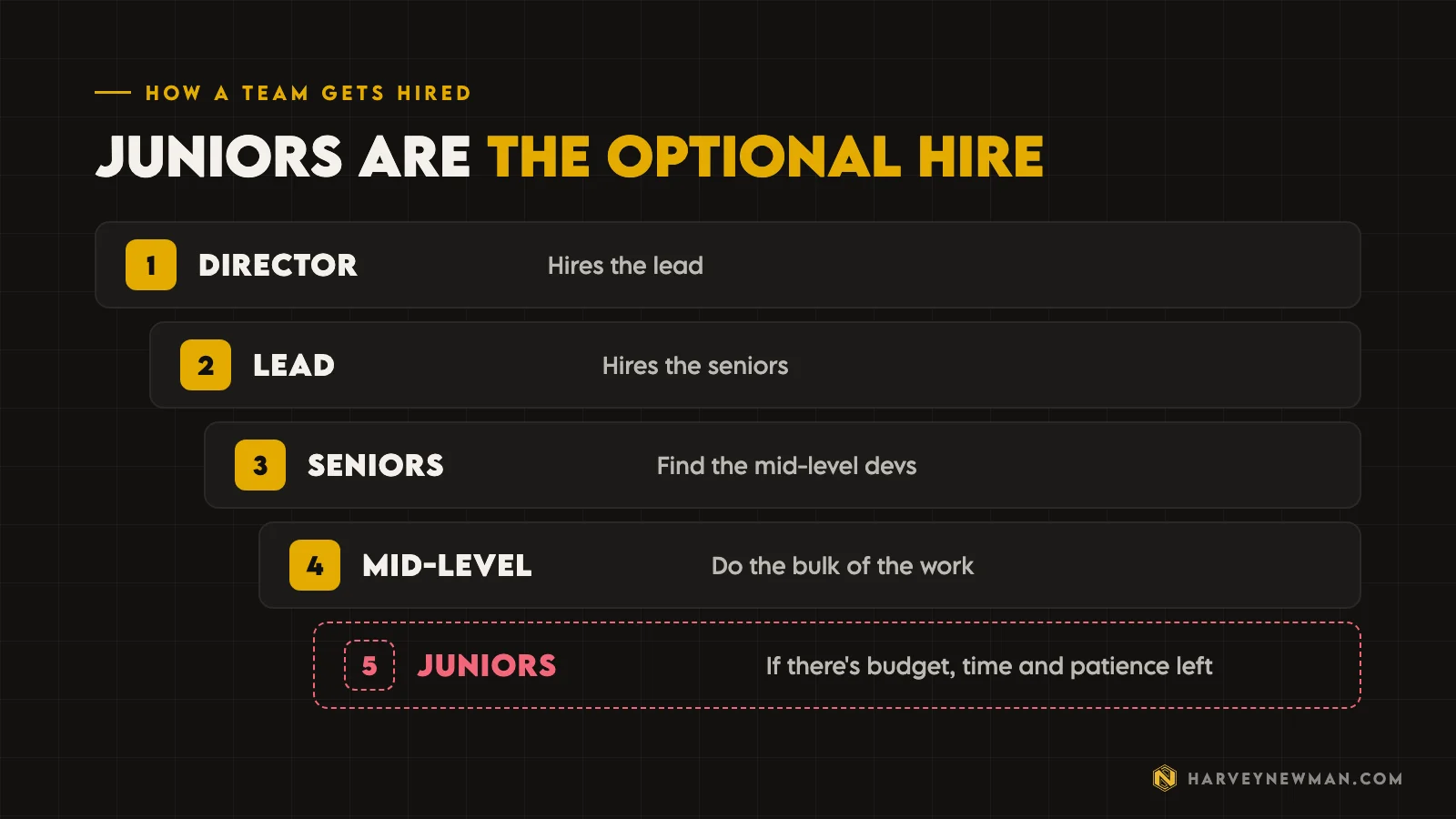
Think about how a team gets built. If you’re a director, you hire your lead. Your lead hires the seniors. The seniors go and find the mid-level animators or developers. Then, if you have the budget, the time and the patience, you hire juniors. That usually happens in the middle or towards the end of development, once things are already propped up and working.
Right now many studios are on fire. Some are closing. Others are trying to hit deadlines and get the game out the door, and when you need to do things properly the first time, experience counts.
We used to have time. Two or three juniors would join, and a mid-level animator would help them learn the pipeline, how we work and the quality bar. That time is gone, because everyone is putting out fires.
If you want to see where those entry level game jobs went, I covered that in where the game dev jobs went.
The junior developer time bomb: what happens to studios in 3 to 5 years?
This is the part I want studio leaders to hear.
Every studio has room for every rank of seniority, because people move up the ladder as they gain experience. If you’re mid-level today, you expect to be senior in a year, two years, maybe three. If you’re senior, you decide whether you want to be a lead or a principal. Most companies have a plan for every employee, with small steps up the ladder, because they know progression brings career fulfilment.
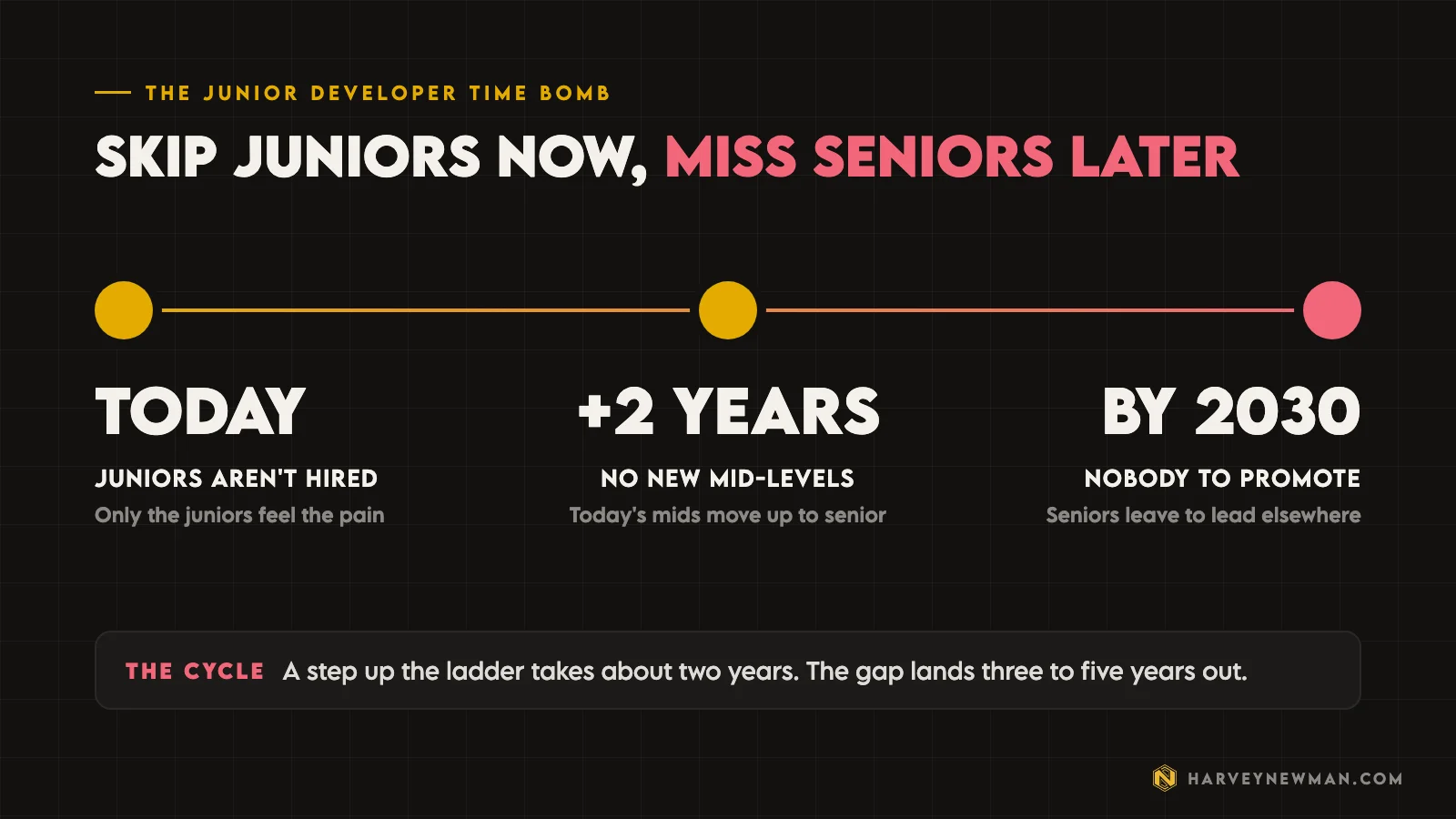
That pipeline runs on roughly a three to five year cycle: about two years per position.
- TodayJuniors aren't hired. Studios feel nothing. Only the juniors trying to get in feel the pain.
- Two years onToday's mid-levels become seniors. Nobody is coming up behind them.
- Around 2029 to 2030Seniors leave to be leads elsewhere, because there's only one lead job per team.
- The breakThe bulk of the work, done by juniors and mid-levels, has nobody to do it.
There are only so many lead and senior positions in a studio. If you have three or four senior animators and one lead role, most of those seniors will eventually leave to lead somewhere else. The funnel narrows the higher you go. That’s exactly why we need juniors coming in at the bottom, constantly progressing up.
The problem is not right now. Companies have no problem not hiring juniors right now.
Harvey Newman
It hasn’t been happening for a good two to three years already. It makes me sad, because people are studying animation at university and learning with mentors, and there’s nowhere for them to go.
One good junior hire pays for itself
Every junior hire is a gamble. When I bring a junior into one of my teams, I’m trusting that this person works hard, turns up on time, is motivated, is self-sufficient and has ideas that can prop up the studio.
I know because I was that gamble. I spent about three and a half years looking for a games job with no success, working retail and serving tables. I was afraid of going back to a job I didn’t like, so I was going to make it happen whatever it took.
Within six months I went from junior to mid. It took me about another two years to reach senior. The animation director who hired me, Jose, was thankful for that hire, and not just for me but for others he took a chance on. When your hire performs well, it makes you look good. Your judgement gets rubber-stamped.
One good bet means your company is well off.
Why fresh ideas from juniors matter
The games industry can get stale. Look at what gets released every month: much of it feels like copycats. Everything has to fit in a box. Everything is a Call of Duty or an Elden Ring.
Juniors arrive with ideas that have been simmering for years while they played games and asked themselves when their time would come. That energy is necessary. Innovation comes from fresh ideas, and nobody has bigger ideas than juniors keen to prove themselves. Lose that and I think the industry goes backwards, not forwards.
If you run a studio and want help building a team that can still grow its own seniors, that’s the kind of thing I work on through my consultancy.
The gap only a studio can show you
Now to the juniors.
You’re probably watching tutorials, taking classes, maybe working with a mentor. No matter how many exercises you do or how much you polish your showreel, nothing replaces being in the trenches for two to four years, shipping a game.
Games are so complex that nobody can tell you every variable involved in making one from beginning to end. You need to sit in the morning stand-ups and the three-hour meetings where decisions get made. You need to hear why a design choice was made and why the game looks the way it does. Those things are invaluable, and you can’t replicate them outside a real studio.
There’s also the gap between your talent, however highly you rate it, and what a studio expects. Every junior wonders what they’re missing. It differs from studio to studio, first person or third person, AAA or indie. You only see it once you’re inside, watching how fast people work, how they get from first pass to second pass to polish, and how they talk to engineers and designers. Sometimes the gap is bigger than you thought. Sometimes you surpass what they expected, which is a huge boost.
How to get a junior game developer job when the main door is closed
Here’s the hopeful part: concrete things you can do today.
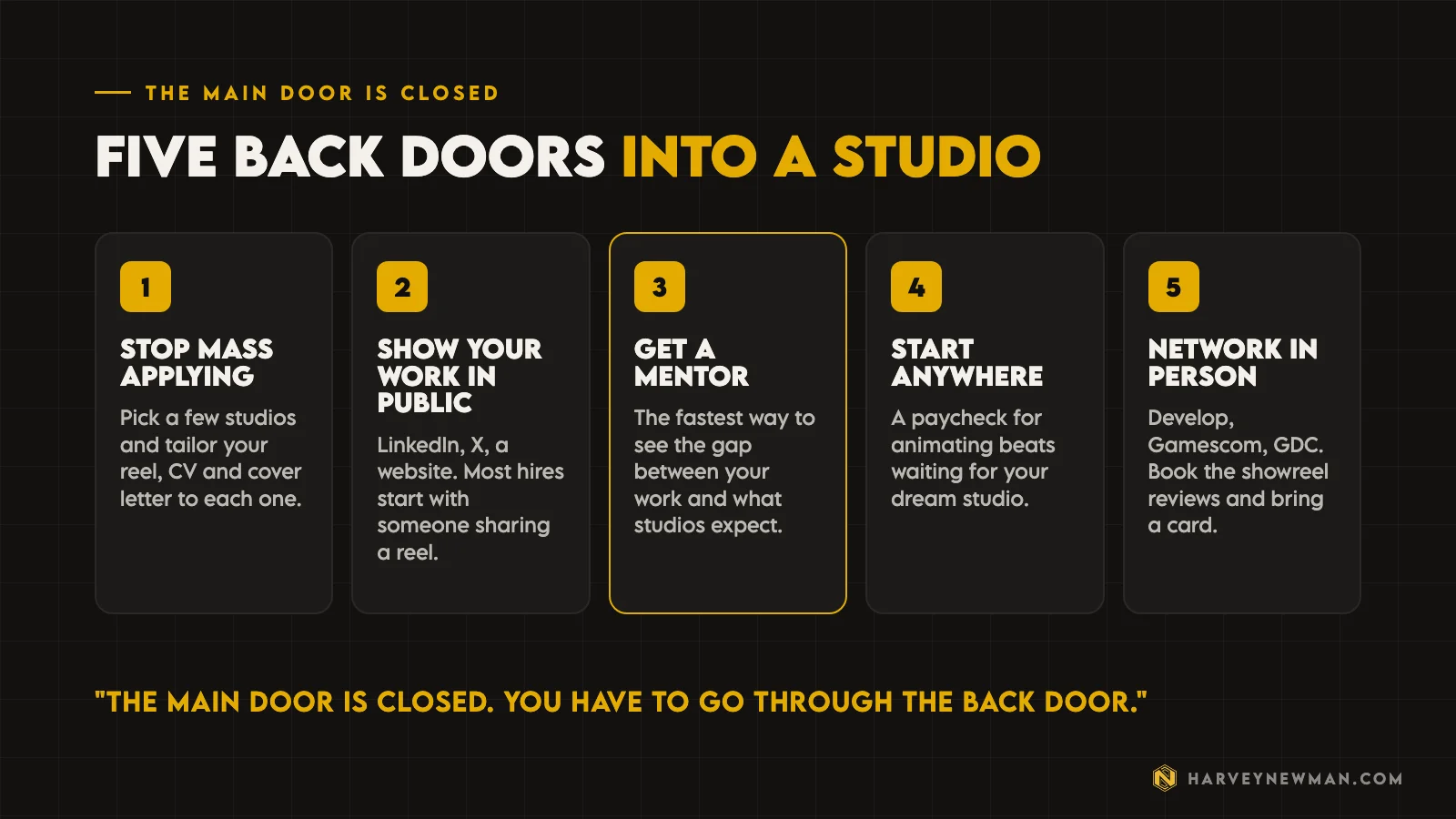
1. Stop mass applying
Firing your showreel at every studio and hoping is the old way. You have a far better chance if you’re strategic, to the point where your reel caters to one specific studio.
We can tell when an applicant took months, maybe a year, to apply to us because they love what we do. Shots similar to our games, a CV that speaks to us, a cover letter about the games we’ve made. We can also tell when an application is generic, and that doesn’t go in your favour. Every studio thinks it’s the centre of the world, and it expects you to know about it.
2. Show your work in public
There’s no bigger advantage than being findable. Someone at a studio is scrolling LinkedIn or X, sees a shot they love and tells whoever does the hiring. Sometimes they just DM you and ask if you’re interested.
I’d bet good money that most talent getting hired right now got hired because someone saw a showreel that stood out and passed the word to the right person. At our studio, most hiring now comes from people recommending people. It saves time, because before we even bring you in for an interview, we’ve seen a snapshot of who you are.
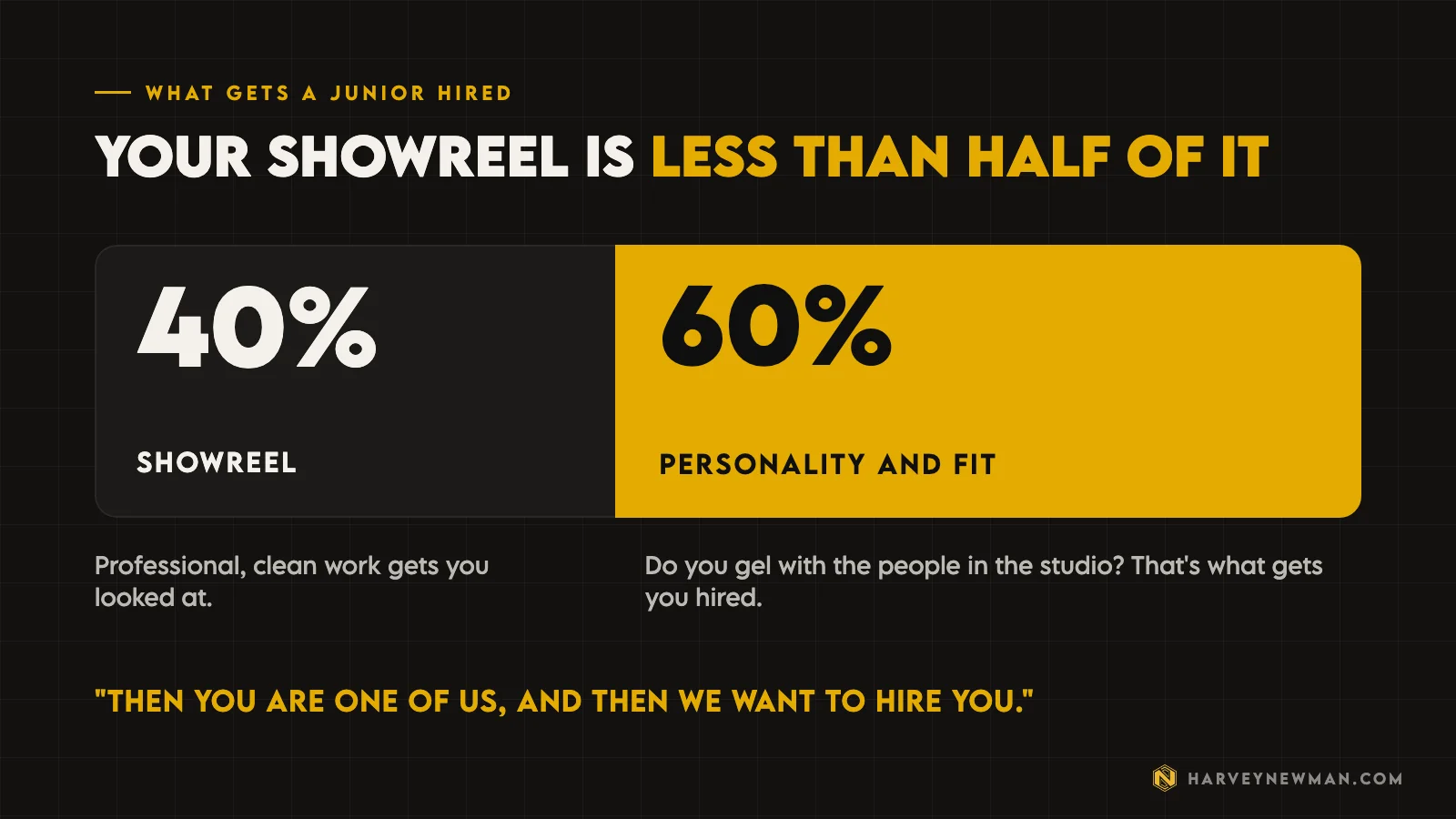
But the work isn’t everything. The showreel is about 40% of the decision. The other 60% is your personality and whether you gel with the people in the studio. Then you’re one of us, and then we want to hire you.
3. Get a mentor
The best way to find out where you sit in that gap is a mentor. A good one has been where you want to be, maybe even worked at the studios you’re aiming for, and can tell you what’s expected internally and what you need to do to get there.
There's no bigger shortcut in this industry right now than finding a good mentor.
Harvey Newman
Invest in yourself. That’s why we built a mentorship programme at Animworks, with seasoned game developers, Blender artists, VFX and cinematics people you can book one to one or in group masterclasses.
4. Start anywhere
Many juniors are fixed on one dream studio. The best advice I got from my own mentor at the start was: start anywhere. As long as you’re getting paid to animate, start there.
You almost never land your dream job first. Through time and experience, and shipping a bunch of games, you end up somewhere you’d dream of. Sometimes the place you idolised as a junior turns out worse than you thought, and the studio that suits you is one you’d never have considered. It’s not about prestige. It’s about a place where you have fun and don’t burn out, because nothing kills the dream faster than a horrible first studio.
5. Network in person
Go outside. In the UK, go to Develop. In Germany or anywhere in Europe, go to Gamescom. In the US, go to GDC. If you know people, use LinkedIn so they can recommend you.
The games industry looks massive from outside, but it’s really small inside.
Most people want to help each other. More and more studios now sit down with young talent at these events for showreel reviews of 15 minutes to an hour, telling you what’s good, what’s missing and whether you’re ready. We’ve been doing them ourselves. Go to those. Bring a card. If you’re good, the studio makes a mental note, and that might be your way in.
The door isn’t shut. It moved.
The door everybody thinks has shut on juniors isn’t shut. The main door is closed, so you go through the back door. The ladder we knew, junior to mid to senior, is broken for now.
I think the people who build relationships now will be far ahead of everyone else. If you get through times that are much harder than when I started, and it was hard then, you’ll be fine when the industry balances itself out.
If you’re a junior and struggling, come and vent in the comments on the video. I’ll be reading. And if you run a studio, tell us there what you look for in a junior. Someone watching might need exactly that.
The video
Watch the full breakdown
Questions people ask
Why are studios not hiring junior game developers?
Juniors are usually the optional hire, brought in mid-production when there is budget, time and patience to train them. Right now many studios are fighting to hit deadlines or stay open, so they hire for experience and the junior roles disappear first.
What happens if studios stop hiring juniors?
Promotions run on a cycle of about two years per step. If nobody is hired as a junior today, there are no mid-levels in a couple of years and nobody to promote into senior and lead roles around 2029 to 2030. Studios will feel it then, not now.
How do I get a junior game developer job in 2026?
Stop mass applying. Tailor your reel and CV to a few studios you love, share your work publicly, get a mentor to show you the gap between your work and studio expectations, take any paid animation job to start, and network in person at events like Develop, Gamescom and GDC.
Does a showreel matter more than personality when hiring juniors?
Harvey puts the showreel at about 40% of the decision. The other 60% is whether you gel with the people in the studio. Good, clean, professional work gets you looked at. Fitting the team gets you hired.
Is a mentor worth it for a junior animator?
Harvey calls a good mentor the biggest shortcut in the industry right now. Someone who has worked where you want to work can tell you exactly what studios expect and what you need to do to reach that level.
And remember,
there are no shortcuts for animation.
 Stay well, stay safe,Harvey NewmanBook a free call →
 Looking for knowledge?How to Thrive in the Games Industry: The Long GameMy book on building a career in games and keeping it. CRC Press, 246 pages.Get the book →
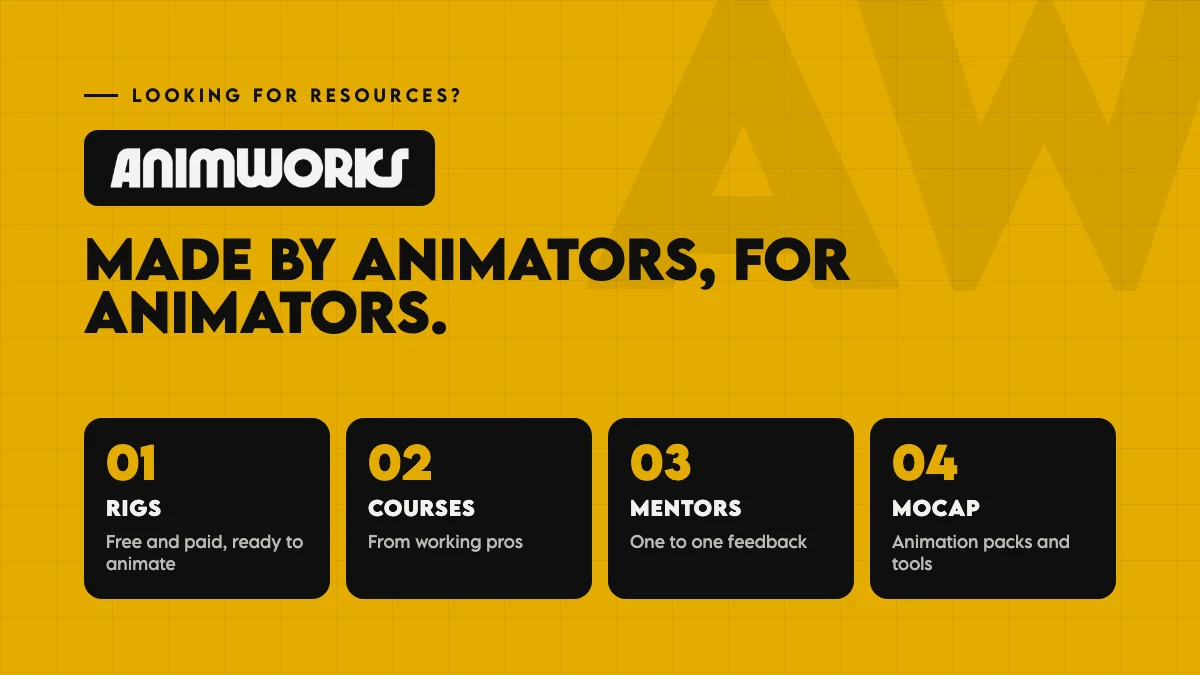 Looking for resources?Rigs, courses and mentors on AnimworksFree and paid rigs, courses from working pros, one to one mentoring and mocap packs.Visit anim.works →
 Where the Game Dev Jobs Went, and How to Get Them18 Sept 2026
 Game Developer Skills the Industry Wants Now: How to Future-Proof Your Career13 Feb 2026
 The Games Industry Is Broken: 90% Is Them, 10% Is Us10 Jul 2026
 Can't Find Animation Jobs? Advice for Animators Struggling Right Now23 Jan 2026